
Neshoba County Circuit Court Overview
The Neshoba County Circuit Court is the county's top trial court for felony crime and major civil disputes. It hears felony criminal prosecutions, civil lawsuits not assigned to another court, and jury trials. It also reviews appeals that move up from Justice Court and Municipal Court. In Mississippi, Circuit Court is one of several trial courts, and it carries the heaviest criminal and civil caseload.
This court belongs to the Eighth Circuit Court District. That district groups four counties under a shared bench, so the same judges travel and rule across the whole region. Neshoba is one of those four counties. Felony cases that begin with an arrest in the county are usually bound over to this court after a preliminary stage in a lower court.
Court records here became easier to reach online in 2024. The county Circuit Court joined Mississippi Electronic Courts, the state filing system, on June 24, 2024. Chancery Court, the separate equity and family court, joined years earlier. That gap matters, because public electronic access to Circuit files is fairly new in Neshoba County.
Neshoba County Circuit Court Judges
Mississippi does not number its Circuit Courts the way some states number trial courts. Instead, the Eighth Circuit District fills two judgeships, called Place One and Place Two, under Miss. Code Ann. Section 9-7-27. Both judges hear felony and civil matters across the district. A judge's chambers handles scheduling and local court administration. The table below lists each place, the sitting judge, and where to reach them.
| Court / Place | Judge | What It Handles | Address | Phone |
|---|---|---|---|---|
| Circuit Court, Place One | Caleb May | Felony criminal, major civil, jury trials, appeals from lower courts | 401 E. Beacon Street, Suite 102, Philadelphia, MS 39350 | 601-656-4830 |
| Circuit Court, Place Two | Christopher Posey | Same Eighth Circuit District jurisdiction | 401 E. Beacon Street, Suite 235, Philadelphia, MS 39350 | 601-656-5776 |
| Judge's Chambers | Circuit bench | Chambers and local court administration | 401 Beacon Street, Suite 205, Philadelphia, MS 39350 | 601-656-7478 |
Judge Posey joined the bench for Place Two in 2025, after the retirement of the prior judge. The county Circuit Court page is the official source for current judge names. Court files themselves are kept by the Circuit Clerk, not the judges, so copy requests go to the clerk's counter.
The Eighth Circuit Court District
Neshoba County sits in the Eighth Circuit Court District. State law sets the district as Leake, Neshoba, Newton, and Scott counties. Miss. Code Ann. Section 9-7-27 names these four counties and gives the district two judgeships. The Mississippi Judiciary explains each trial court level on its About the Courts page.
Because the district spans four counties, court terms rotate. A judge may hold court in one county one week and another the next. For a Neshoba case, the local venue is the county courthouse in Philadelphia. The Circuit Clerk keeps the local case index and is the practical starting point for any public request tied to a county file.
The courthouse itself is the Neshoba County Courthouse at 401 East Beacon Street, built in 1928 and enlarged with side wings in 1954. The same building holds the Circuit Clerk, the Chancery Clerk, and the judge's chambers, though each office sits in its own suite. Knowing the suite number before a visit cuts down on wrong turns inside the courthouse.
Circuit, Chancery, and Justice Courts
Neshoba County has no separate County Court, so its trial work splits among three tracks. Circuit Court takes felony crime and large civil suits. Chancery Court takes equity, family, and probate matters such as divorce, land title, and estates. Justice Court and the city Municipal Courts handle small civil claims, misdemeanors, and traffic. The table compares the three on points that decide where a case belongs.
| Circuit Court | Chancery Court | Justice / Municipal Court | |
|---|---|---|---|
| Main Cases | Felony crime, major civil lawsuits | Divorce, custody, land, estates, guardianship | Small claims, misdemeanors, traffic, ordinances |
| Criminal Reach | Felonies and bound-over cases | None | Misdemeanors and preliminary felony steps |
| Family Matters | No | Yes | No |
| Jury Trials | Yes | No | Limited, by court |
| Appeals Go To | State appellate courts | State appellate courts | Circuit Court |
The split keeps similar cases together. A divorce never starts in Circuit Court, and a felony trial never starts in Chancery Court. When a person is unsure, the Circuit Clerk and Chancery Clerk can point them to the right counter. Choosing the wrong court only slows the request.
How a Neshoba County Case Moves
A criminal case rarely starts and ends in one court. Lower-court charges, felony review, and appeals each have a stage. Many cases reach Circuit Court only after a Justice Court or Municipal Court step. From there, a losing party may ask a higher court to review the result.
Case path: Justice / Municipal Court › Circuit Court › Mississippi Court of Appeals › Mississippi Supreme Court
Appeals from Justice Court and Municipal Court move up to Circuit Court for a fresh look. Decisions from Circuit Court itself move on to the state appellate courts. The Mississippi Court of Appeals hears most of these, and the Mississippi Supreme Court sits at the top. Federal claims follow a separate track, covered further down.
Felony and Civil Case Jurisdiction
Circuit Court carries two main jobs. On the criminal side, it is the felony trial court. A felony file may hold an indictment or information, arraignment, bond orders, motions, plea entries, trial settings, verdicts, sentencing orders, and appeal notices. Probation and post-release supervision flags can appear too. Lower courts handle the early steps, then bind serious cases over to this court.
On the civil side, Circuit Court hears lawsuits that are not assigned only to another court. Common filings include complaints, answers, motions, orders, judgments, cost bills, and garnishment papers. Jury trials in the county happen here. The court also reviews the record when a Justice or Municipal case is appealed. Some case dockets carry status flags such as Bench Warrant Issued, Nolle Pros Pending, Sealed Case, or Expunged.
Note: Youth Court matters, sealed cases, and expunged records are restricted, so a public Circuit Court search may show limited detail or nothing at all.
Neshoba County Circuit Court Records
The Circuit Clerk keeps the county's Circuit Court files and is the public access point. Delana A. Waddell holds that office, working from Suite 110 of the courthouse. Phone requests reach her office at 601-656-4781. Online, county Circuit and Chancery cases run through Mississippi Electronic Courts, with public viewing through the PAMEC system. The county Circuit Court joined MEC on June 24, 2024.
Public document viewing through PAMEC is gated by an account and may carry page fees. A free option is in-person review at the courthouse terminal during business hours. For copies that are not online, the county public-record policy lets any person inspect files during working hours, charges $0.50 per mechanically copied page, and asks for a written request plus a deposit when staff pull copies. The official Circuit Court page lists current judges and chambers. Anyone tracking hearing dates can also check the Neshoba County court dockets, while the Circuit Clerk office handles certified copies and counter requests.
A written copy request works best when it names the case number if known, the party names, the court, the record type, and a filing year or date range. The county must produce the record within 14 days of receiving the request at the proper office, or send a letter stating the specific reason it cannot. Certified copy fees are not posted in the county's online sources, so confirm that charge with the Circuit Clerk before mailing a deposit.
Federal Court for Neshoba County
Federal cases are separate from county court files. They cover federal crimes, civil-rights claims, constitutional questions, habeas petitions, diversity civil suits, and bankruptcy. Neshoba County falls under the U.S. District Court for the Southern District of Mississippi, and there is no federal courthouse inside the county. A Circuit Court search will not return federal cases, so those must be looked up through the federal system.
The Southern District of Mississippi runs its public information through its court website. You can review judge listings, local rules, and divisional details on the district court homepage.
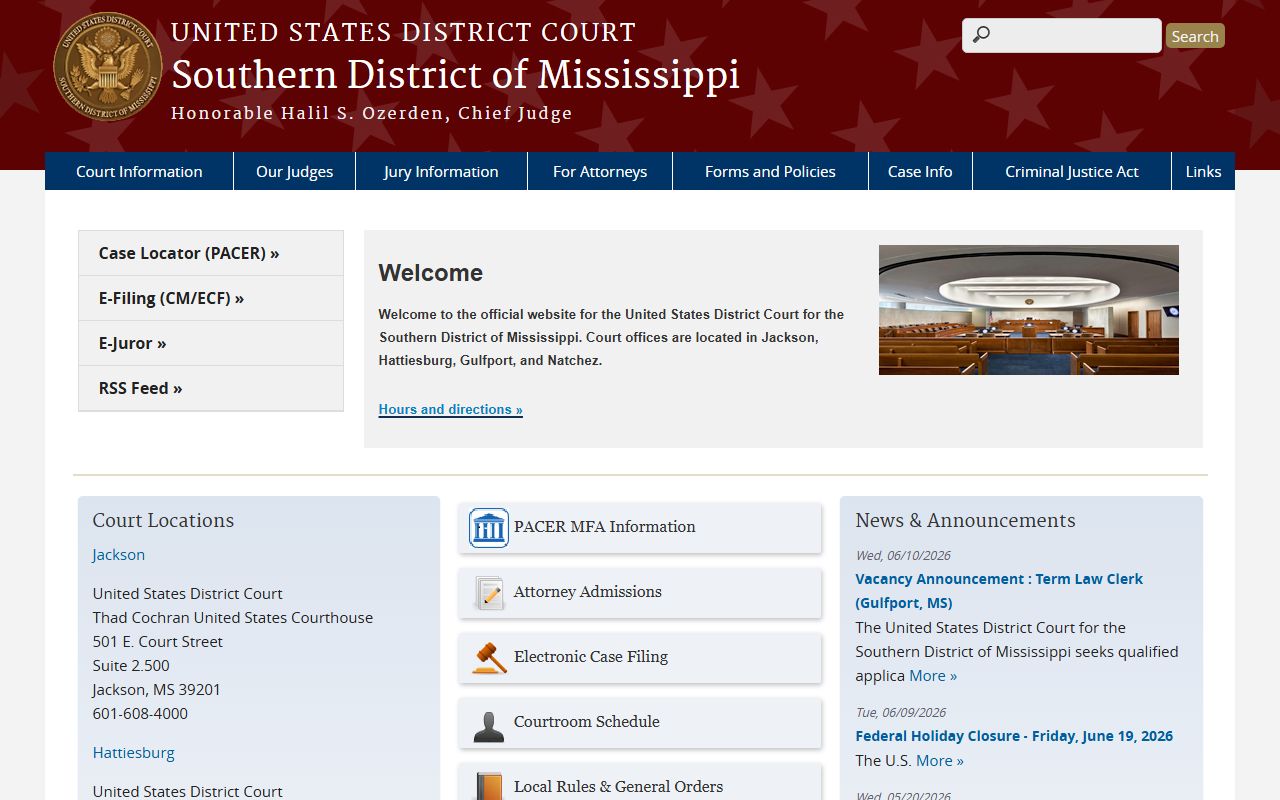
The homepage links to offices in Jackson, Hattiesburg, Gulfport, and Natchez, with Jackson the nearest primary contact for most Neshoba filings.
Neshoba County is placed in the Northern Division of the district. The court's divisional county listing confirms which counties fall in each division.
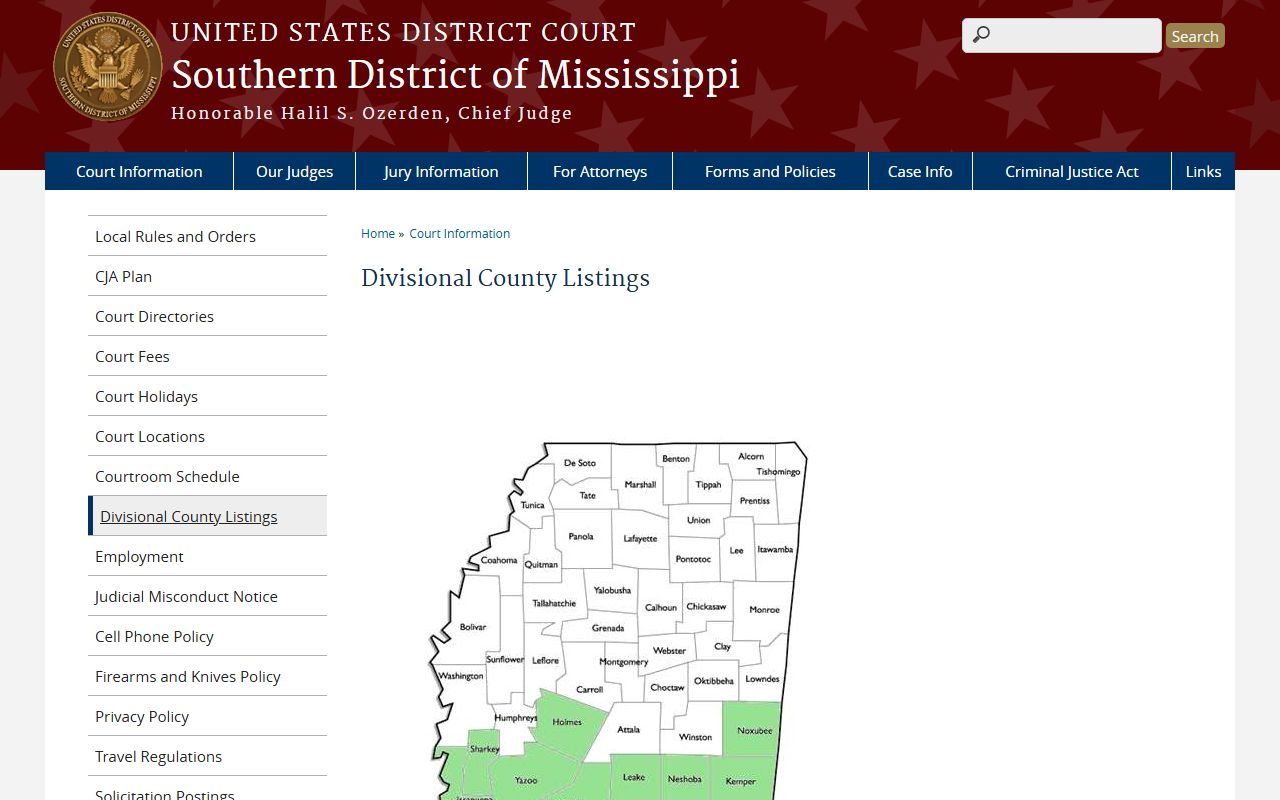
The Northern Division groups Neshoba with Hinds, Leake, Madison, Rankin, Scott, and many more, which is why Jackson handles much of the division's work.
Federal court files are read through PACER, the national electronic records service. The district explains account setup and fees on its PACER information page.
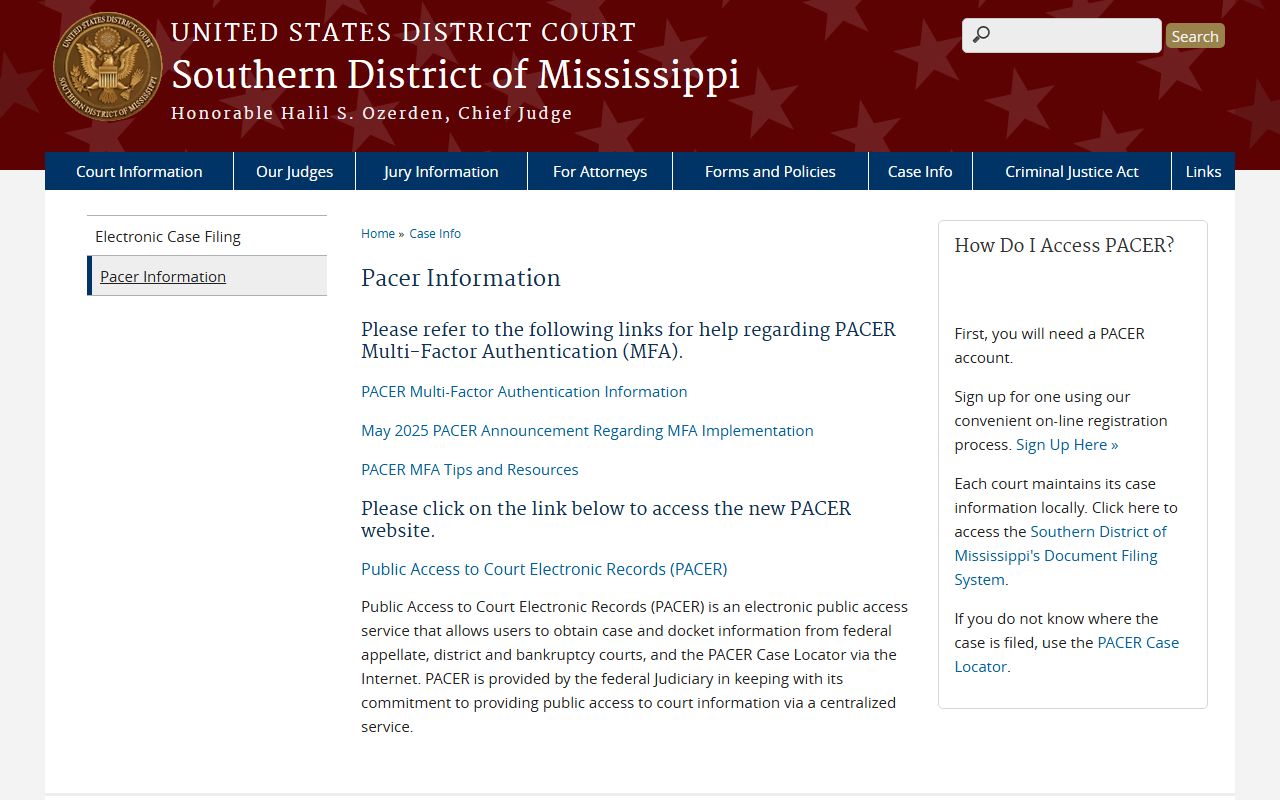
PACER shows case and docket information from district, appellate, and bankruptcy courts, and it includes a national Case Locator for broad searches.
To open the district court directly inside PACER, use the CM/ECF court lookup for the Mississippi Southern District. That district court lookup points to the correct filing and search portal.
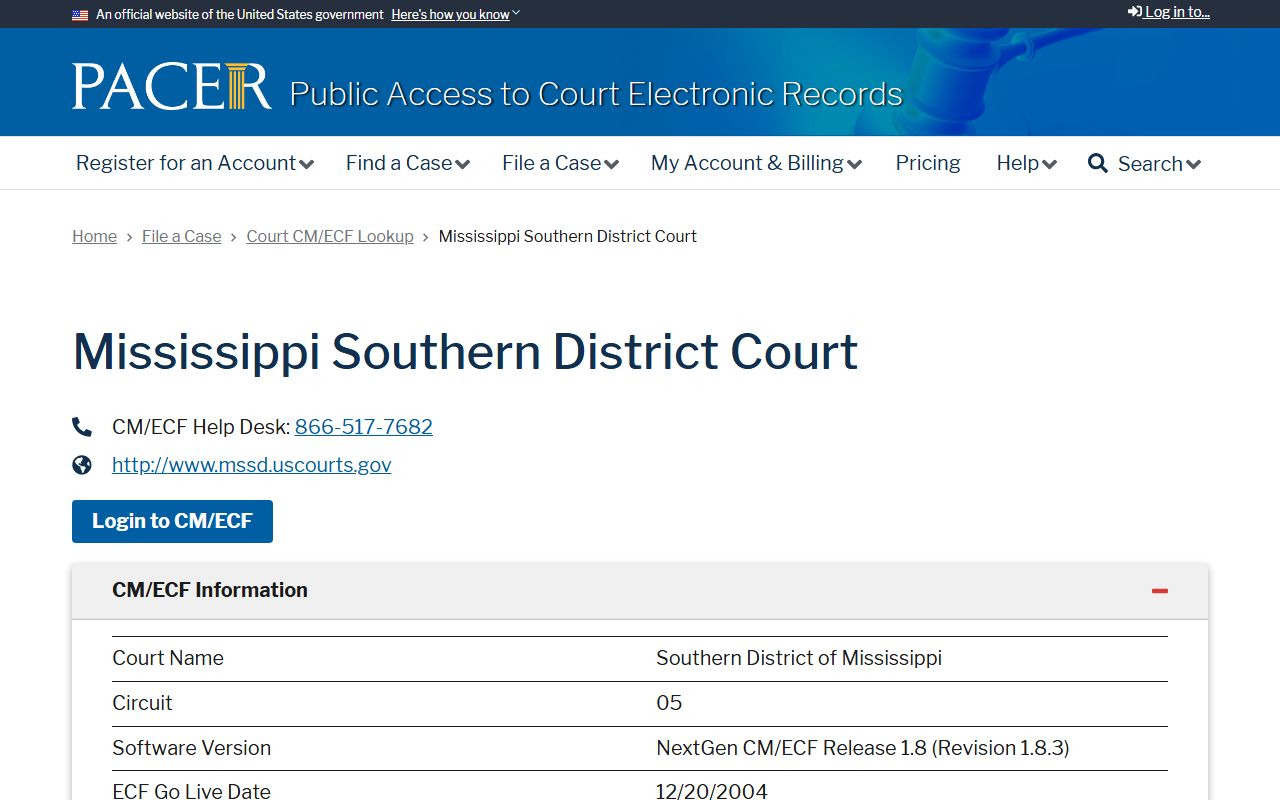
The lookup gives the court's electronic filing address, so a registered user reaches the right docket system for civil and criminal federal cases.
Bankruptcy for Neshoba County goes to the U.S. Bankruptcy Court for the Southern District of Mississippi. Its bankruptcy court homepage lists judges, the clerk, and courthouse locations.
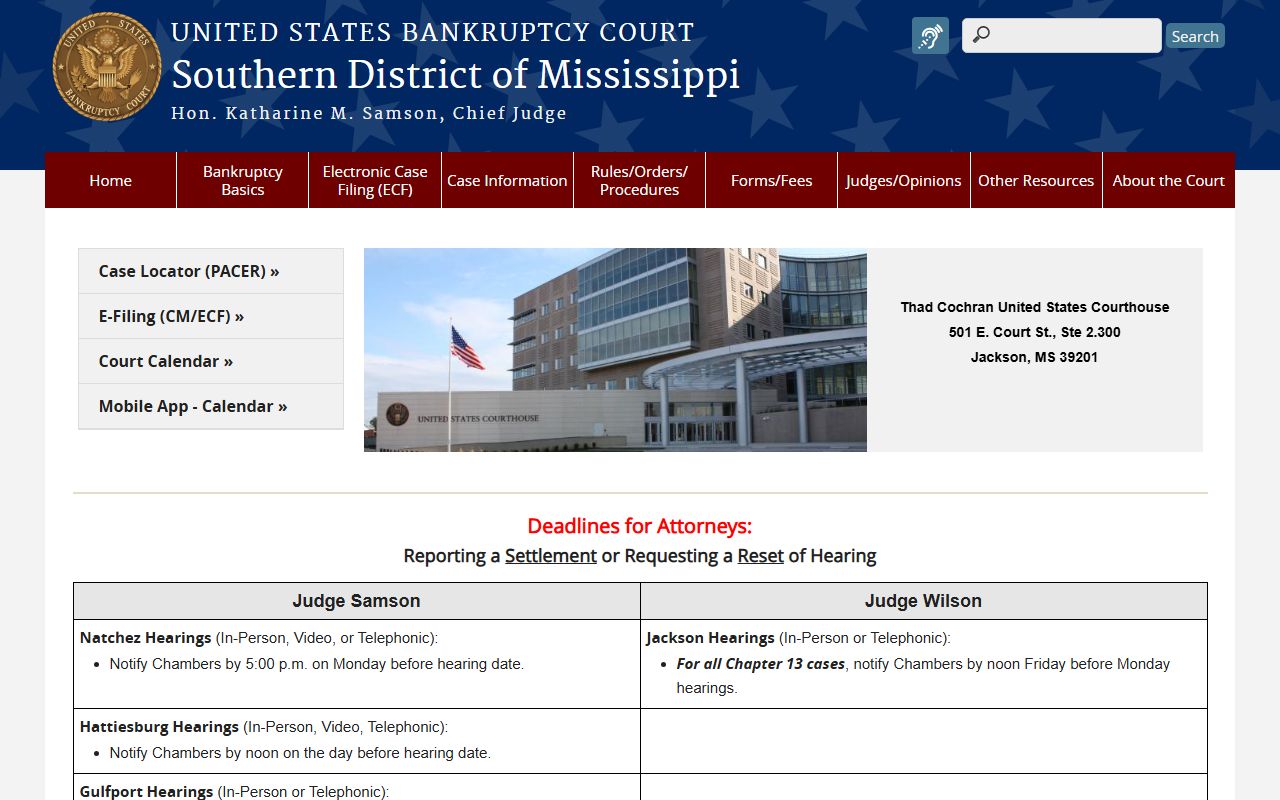
The bankruptcy court works from the Thad Cochran U.S. Courthouse at 501 E. Court St. in Jackson and the Dan M. Russell Jr. U.S. Courthouse in Gulfport.
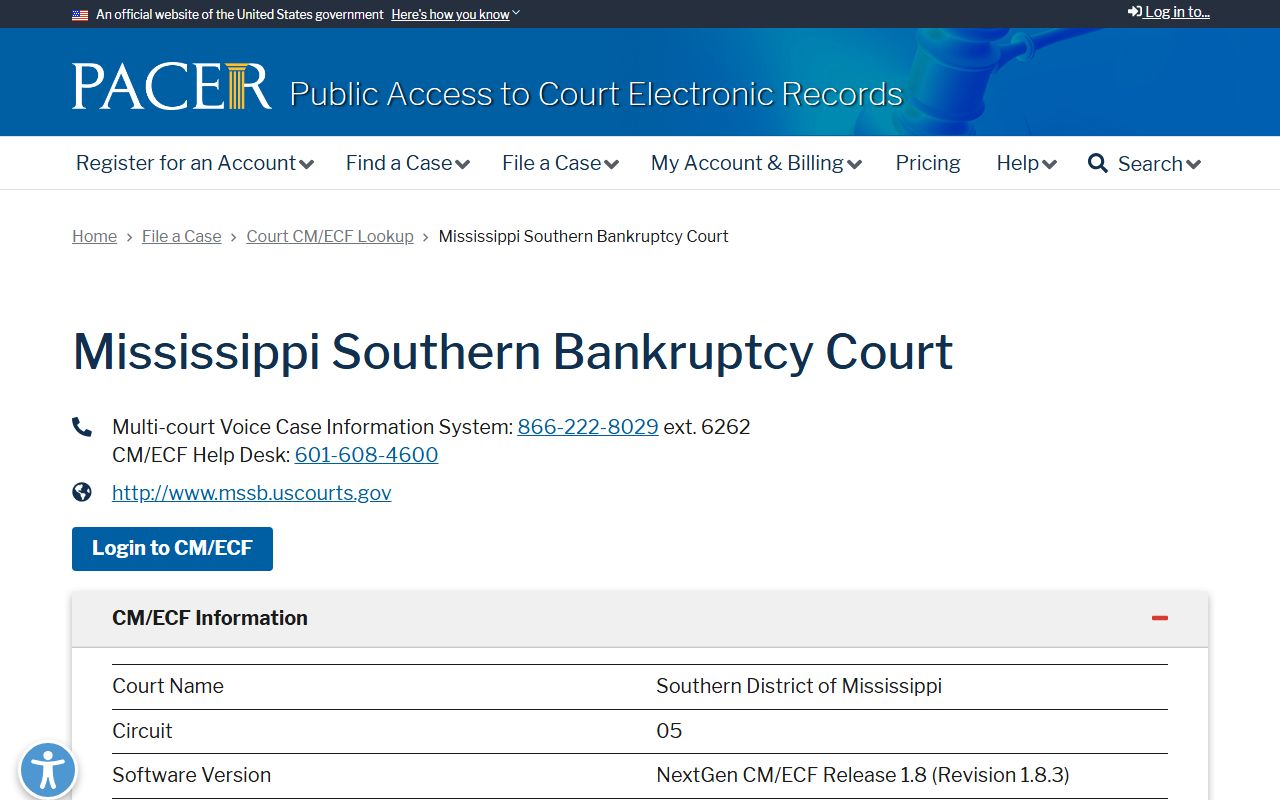
Bankruptcy dockets also sit in PACER under their own court code. The bankruptcy court lookup opens the right CM/ECF portal for those filings.
Keeping the federal and county systems straight saves time, because a county clerk cannot pull a federal file and PACER does not hold Circuit Court cases.